0.7m² or 1m²? Understanding head of stair vent requirements
:format(webp):blur(10))
:format(webp):blur(10))
The question of whether a head of stair vent should provide 0.7m² or 1m² ventilation performance continues to create confusion across many projects.
While the figures themselves may appear straightforward, they are often referencing different methods of measurement – meaning they are not always directly comparable.
Understanding the distinction between aerodynamic free area and physical free area is important for consultants, contractors, installers and main contractors alike, helping ensure the correct products are specified, procured and installed in line with the project’s fire strategy and compliance requirements.
Why the confusion happens
In smoke ventilation, different standards and guidance documents can refer to different measures of vent area.
For example:
Aa generally refers to aerodynamic free area
Av or free area may refer to the physical open area
That distinction is important.
A 0.7m² aerodynamic free area requirement is performance-based.
A 1m² free area requirement is generally based on physical open area.
So when someone asks whether a stair vent should be 0.7m² or 1m², the real question is:
Which standard is the project following, and what type of area is actually being measured?
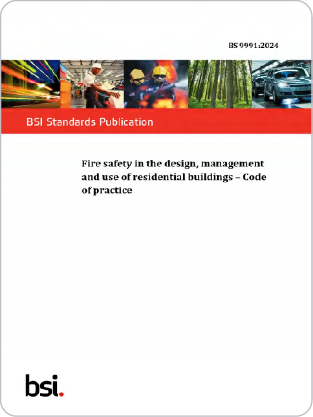
BS 9991:2024 and aerodynamic performance
Under BS 9991:2024, smoke ventilation requirements are increasingly discussed in terms of aerodynamic free area.
This means the requirement is based on how the vent performs under test conditions – not simply the physical size of the opening.
That is why a head of stair AOV may be described as requiring 0.7m² aerodynamic free area, often shown as Aa.
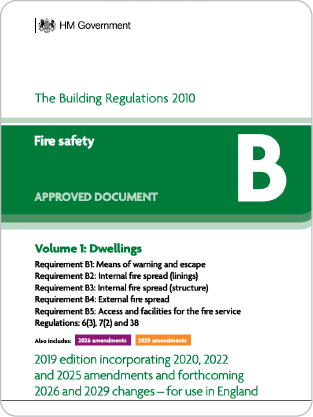
Approved Document B and free area
Approved Document B also provides guidance on smoke ventilation, but the way requirements are expressed can differ depending on building type and design route.
On some projects – particularly lower-rise or simpler buildings – the requirement may instead be described as 1m² free area.
This is where confusion can arise.
A 1m² free area requirement is not automatically the same as 0.7m² aerodynamic free area.
One is generally based on physical opening area. The other is based on tested aerodynamic performance.
They should not be treated as directly interchangeable without checking the design basis and product performance data.

Why this matters for specifiers and consultants
For consultants and specifiers, the key is clarity.
Before selecting products or issuing schedules, it is important to confirm:
which standard is being followed
whether the requirement is aerodynamic free area or free area
whether the product data supports the required performance
how compliance will be evidenced
This is especially important when coordinating between architects, fire consultants, MEP consultants and contractors.
If the requirement is not clearly defined early on, different parties may interpret it differently.
Brad Crisp, Commercial & Specification Manager, said:
The issue is rarely the number itself – it’s understanding what the number actually represents. 0.7m² Aa and 1m² free area are not automatically interchangeable.

Why this matters for contractors and installers
For contractors and installers, the challenge often appears when drawings, schedules and technical data do not fully align.
If a stair vent is described only by size – without clarifying whether the requirement is aerodynamic free area or physical free area – this can create confusion during procurement and installation.
That may lead to:
product queries
substitution issues
late-stage redesign
installation delays
additional checks during commissioning and handover
Clear technical data and defined performance requirements help reduce ambiguity before products reach site.
For installers, the objective is simple:
Install a product that matches the project requirement and can be supported with the correct documentation.

Why this matters for main contractors
For main contractors, unclear smoke ventilation requirements can create programme and coordination risk.
A small misunderstanding around vent area can affect:
design approvals
procurement
subcontractor coordination
installation sequencing
smoke control commissioning
handover documentation
If the issue is discovered late in the project, the impact can become disproportionately disruptive.
The safest approach is to establish clarity early:
Are we working to 0.7m² aerodynamic free area, 1m² free area, or another project-specific requirement?
Once that is confirmed, product selection, procurement and installation become significantly more straightforward.
Orwin White, Sales Manager, said:
The earlier performance requirements are understood, the easier it is to avoid late-stage changes. It gives contractors and project teams more confidence throughout the process.
The key takeaway
So – should your head of stair vent be 0.7m² or 1m²?
The answer depends on:
which standard the project is following
what type of area measurement is required
how the product performance has been declared and tested
The key question is not simply:
“What size is the vent?”
It is:
“What performance requirement does the vent need to meet?”
For consultants, that means specifying clearly.
For contractors, that means procuring correctly.
For installers, that means fitting the correct product.
For main contractors, that means reducing risk at testing, commissioning and handover.
Understanding the difference between aerodynamic free area and physical free area early in the process can help avoid confusion, redesign and delays later in the project lifecycle.
About Sertus
Sertus is a UK-based manufacturer of smoke ventilation products, dedicated to safeguarding lives and property through unequivocally compliant, expertly engineered, and reliably manufactured solutions. Driven by our vision to be the UK’s manufacturer of choice for smoke ventilation, we’re setting the standard – with products that combine innovation, performance, and quality. From early-stage design through to post-install support, we partner with contractors, architects, consultants, and developers to deliver smoke ventilation that works – every time.
At Sertus, Make It Simple isn’t just a tagline – it’s our promise. We simplify the complex world of fire safety through intelligent design, clear guidance, and comprehensive support, helping our customers achieve compliant, high-performance buildings with confidence. Learn more at sertus.uk. For media enquiries, contact hello@sertus.uk or call 01483 269999.
:format(webp):blur(10))
:format(webp):blur(10))
:format(webp):blur(10))
:format(webp):blur(10))